
Majlis Renovation in Abu Dhabi
The majlis is where a family receives its guests, so it has to look right, stay cool with a full room and sound calm when twenty people are talking. ALHUD renovates majlis rooms inside villas and standalone majlis buildings across Abu Dhabi.

Quick answer: Majlis renovation in Abu Dhabi usually covers the seating layout, gypsum ceilings and lighting, AC sized for large gatherings, acoustic finishes, flooring, wall panelling, joinery for a coffee or hospitality corner and a guest washroom. Interior work rarely needs a building permit, but a new external majlis or an extension does. ALHUD surveys the room for free and fixes the price in writing.
What a Majlis Renovation Includes
A good majlis is designed around how the family hosts: how many guests come at once, whether seating is on the floor or on sofas, and where coffee and dates are served from.
- Seating plan for floor cushions, sofas or a mix of both
- Layered gypsum ceilings with cove lighting
- Feature walls, timber or fabric panelling and Arabic pattern details
- Marble or porcelain flooring with carpet zones
- Hospitality corner and storage in custom joinery
- AC upgrade sized for a full room, with quiet air delivery
- Guest washroom refresh as part of a bathroom renovation
- Separate entrance, lobby or shoe storage where space allows

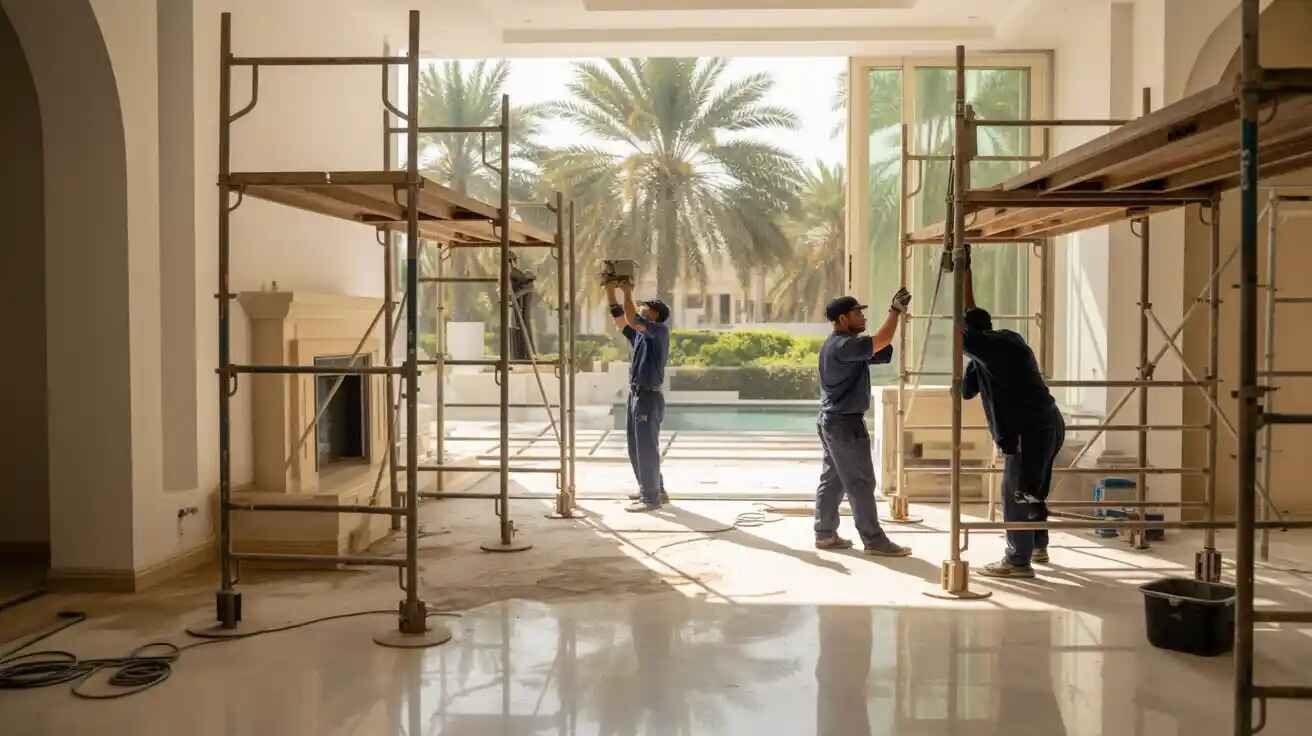
Designing a Majlis That Works With a Full Room
Most of the complaints we hear about an old majlis come down to three things: it gets too warm when it's full, it echoes, and the lighting is either too dim or too harsh.
Cooling for a crowd
AC that copes with a quiet afternoon often struggles when the room fills up. Capacity, air throw and return paths are checked so guests near the walls aren't sitting in a draught or a warm corner.
Sound that stays calm
Hard marble floors and bare walls make conversation loud. Carpet zones, fabric panels and acoustic ceiling details bring the echo down without losing the look.
Lighting in layers
Cove lighting for atmosphere, downlights for reading and serving, and feature lighting on panels or artwork, each on its own switch or dimmer.
Interior Majlis vs External Majlis Buildings
Renovating a majlis room inside the villa is mostly interior work. Building a new external majlis, enlarging one or converting an annex is building work, and it is treated very differently.
Abu Dhabi City Municipality has briefed consultancy offices that separate guest or service annexes must be licensed through its electronic building licensing system, and some residential complexes limit where a majlis can be built on the plot. The same briefing noted that a tent cannot be licensed on a plot that already has a majlis.
Because the rules depend on the plot and the community, your consultant confirms what applies before drawings are finalised. Our guide to renovation permits in Abu Dhabi explains the usual approval route.
Questions to Answer Before Design Starts
- How many guests does the majlis need to seat on a busy evening?
- Floor seating, sofas, or both in separate zones?
- Does the majlis need its own entrance and washroom?
- Where will coffee, tea and dates be prepared and served?
- Will the room double as a family lounge on quieter days?
- Are there TV, sound or prayer area requirements?
Choosing a Majlis Style
Most majlis rooms in Abu Dhabi fall somewhere between two styles. A traditional majlis uses floor seating, rich carpets, patterned panels and warm lighting. A contemporary majlis uses low sofas, cleaner lines, stone and timber, with Arabic details kept to a few feature elements.
Many families mix the two, with a traditional seating zone for formal gatherings and a sofa area for everyday use.
Materials That Suit a Majlis
- Marble or large-format porcelain with carpet zones
- Timber or fabric wall panels for warmth and sound control
- Gypsum ceilings with cove and feature lighting
- Washable upholstery and stain-resistant carpets
- Polished stone kept in shape with marble polishing
Majlis Renovation Across Abu Dhabi
Majlis work is most common in the family villa districts on the mainland and in the established villa areas on the island.
Majlis Renovation Questions, Answered
Do I need a permit to renovate a majlis in Abu Dhabi?
Renovating the finishes inside an existing majlis room rarely needs a building permit. Building a new external majlis, extending one or converting an annex is building work and usually needs municipality approval through a licensed consultant.
How do you keep a majlis cool when it is full of guests?
The AC is checked against the number of people the room has to hold, not just its floor area, and air delivery and return paths are planned so the whole room stays even.
Can you reduce the echo in a marble majlis?
Yes. Carpet zones, fabric or timber wall panels and acoustic ceiling details reduce echo noticeably while keeping marble where it matters most.
Can you add a coffee corner or pantry to the majlis?
Yes. A hospitality corner with joinery, a small sink and dedicated sockets for coffee machines and kettles can usually be added if water and drainage can reach it.
How long does a majlis renovation take?
A finishes refresh of an existing majlis is a matter of weeks, while a new external majlis depends mainly on the time needed for drawings and approvals.
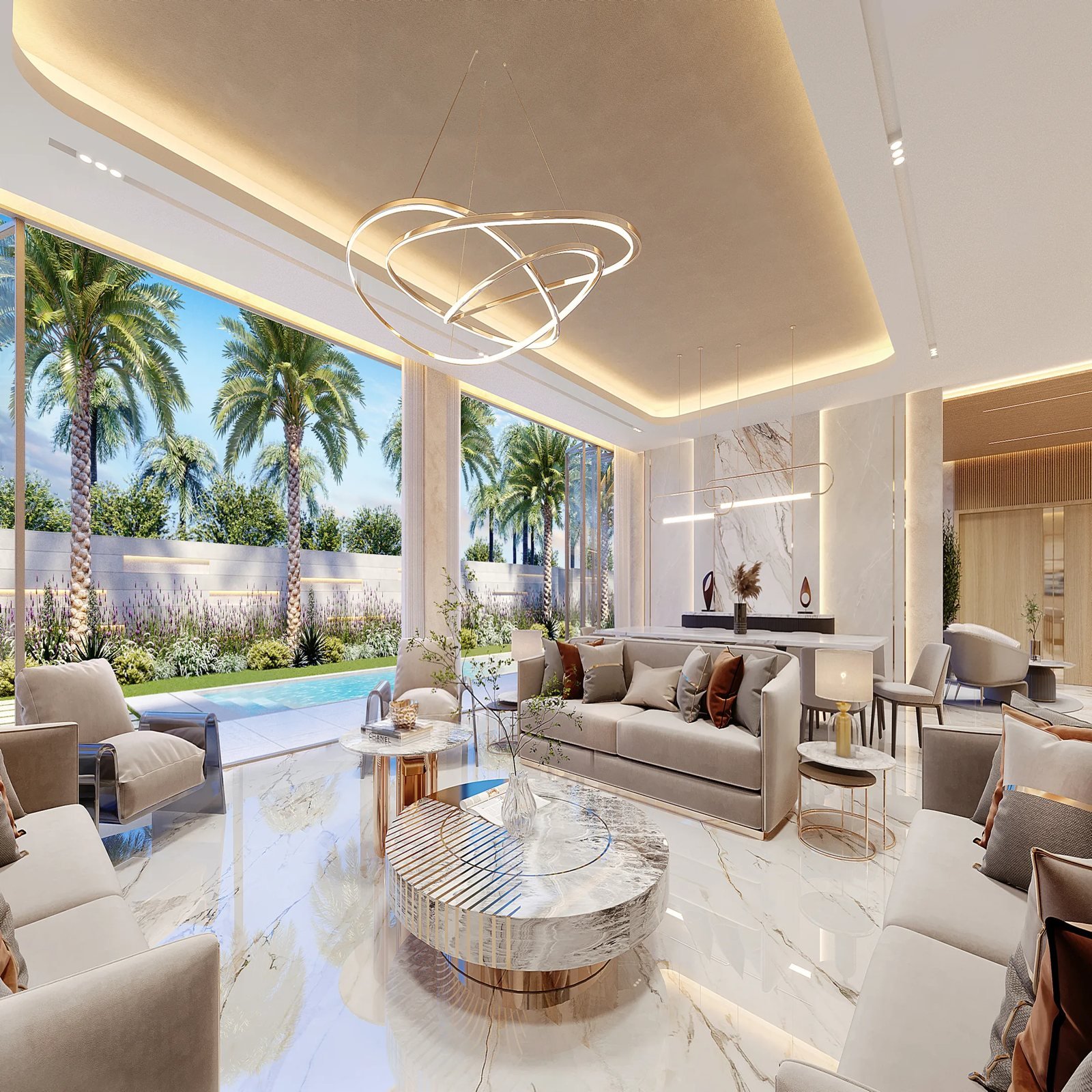
Planning a New Look for Your Majlis?
Book a free site visit. An engineer measures the room, checks the AC and lighting, and returns a fixed itemised quote within 48 hours.